
- Marplan is available: Please ask the pharmacist for NDC 30698-032-01
- For Patients
- ☰


MARPLAN® (isocarboxazid) Tablets
When first-line therapy fails:
Consider MARPLAN for your patients diagnosed with depression1
MARPLAN may help, even if other antidepressants have failed

MARPLAN harnesses MAO inhibitor power to effectively manage the symptoms of major depressive disorder1
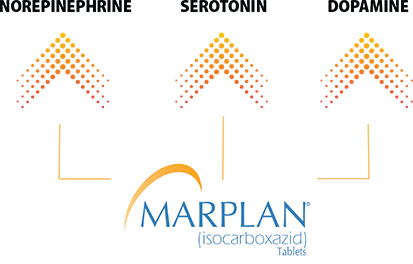
Unlike SSRIs, MARPLAN targets all 3 key mood-lifting neurotransmitters1
Consider MARPLAN as an alternative to conventional therapy
What you need to know when prescribing MARPLAN
- Overview of drug interactions and contraindications
- Dietary considerations
- Download the dietary guide
Validus is committed to ensuring MARPLAN is available for patients who need it: NDC 30698-032-01
Reference1. Marplan. Prescribing information. Validus Pharmaceuticals LLC; 2020.
MARPLAN® (isocarboxazid) TABLETS
IMPORTANT SAFETY INFORMATION
WARNING: Suicidality and Antidepressant Drugs
MARPLAN is not approved for use in pediatric patients. Antidepressants increased the risk compared to placebo of suicidal thinking and behavior (suicidality) in children, adolescents, and young adults in short-term studies with Major Depressive Disorder (MDD) and other psychiatric disorders. Anyone considering the use of MARPLAN or any other antidepressant in a child, adolescent, or young adult must balance this risk with the clinical need. Short-term studies did not show an increase in the risk of suicidality with antidepressants compared to placebo in adults beyond age 24; there was a reduction in risk with antidepressants compared to placebo in adults aged 65 and older. Depression and certain other psychiatric disorders are themselves associated with increases in the risk of suicide. Patients of all ages who are started on antidepressant therapy should be monitored appropriately and observed closely for clinical worsening, suicidality, or unusual changes in behavior. Families and caregivers should be advised of the need for close observation and communication with the prescriber.
Pooled analyses of short-term (4 to 16 weeks) placebo-controlled trials of 9 antidepressant drugs (SSRIs and others) in children and adolescents with MDD, obsessive compulsive disorder (OCD), or other psychiatric disorders (a total of 24 trials involving over 4400 patients) have revealed a greater risk of adverse events representing suicidality during the first few months of treatment in those receiving antidepressants. The average risk of such events in patients receiving antidepressants was 4%, twice the placebo risk of 2%. No suicides occurred in these trials.
INDICATIONS AND USAGE
MARPLAN is approved for the treatment of depression.
Because of its potentially serious side effects, MARPLAN is not an antidepressant of first choice in the treatment of newly diagnosed patients with depression.
The antidepressant effectiveness of MARPLAN in hospitalized patients with depression or in patients who are endogenomorphically retarded and depressed has not been adequately studied.
The effectiveness of MARPLAN in long-term use (longer than 6 weeks) has not been systematically evaluated in controlled trials. Healthcare providers should periodically assess benefits and risks of continued treatment.
CONTRAINDICATIONS
Concomitant use of:
- monoamine oxidase inhibitors (MAOIs) or dibenzazepine derivatives
- sympathomimetics (including amphetamines)
- some central nervous system depressants (including narcotics and alcohol)
- antihypertensive agents, such as thiazide diuretics
- meperidine
- antihistaminic, sedative, or anesthetic drugs
- dextromethorphan
- selective serotonin reuptake inhibitors (SSRIs) and other serotonergic drugs
- certain anesthetic agents
- bupropion HCL
- over-the-counter drugs that contain vasoconstrictor
- cheese or other foods with a high tyramine content
- excessive quantities of caffeine
- tryptophan
Other contraindications:
- confirmed or suspected cerebrovascular defect or known cardiovascular disease, hypertension, or history of headache
- known hypersensitivity to isocarboxazid
- presence of pheochromocytoma
- history of liver disease or in patients with abnormal liver function tests
- severe impairment of renal function
See full Prescribing Information for a list of contraindicated medicines and additional clinical considerations to manage contraindications.
WARNINGS AND PRECAUTIONS
Clinical Worsening and Suicide Risk
MARPLAN may cause worsening of depression and/or the emergence of suicidal ideation and behavior (suicidality) or unusual changes in behavior. Consideration should be given to changing the therapeutic regimen, including possibly discontinuing the medication, in patients whose depression is persistently worse or who are experiencing emergent suicidality or symptoms that might be precursors to worsening depression or suicidality, especially if these symptoms are severe, abrupt in onset, or were not part of the patient's presenting symptoms.
Families and caregivers of patients being treated with antidepressants for MDD or other indications, both psychiatric and nonpsychiatric, should be alerted to the need to monitor patients for the emergence of agitation, irritability, and unusual changes in behavior, as well as to the emergence of suicidality, and to report such symptoms immediately to healthcare providers.
See full Prescribing Information for additional information regarding worsening of depression and/or the emergence of suicidality.
Screening Patients for Bipolar Disorder
MARPLAN is not approved for use in treating bipolar depression. Patients with depressive symptoms should be adequately screened to determine if they are at risk for bipolar disorder prior to initiating treatment with MARPLAN.
Second-line Status
MARPLAN is not recommended as initial therapy but should be reserved for patients who have not responded satisfactorily to other antidepressants.
Hypertensive Crises
Administration of MARPLAN with certain drugs and foods may result in hypertensive crisis. Blood pressure should be followed closely in patients taking MARPLAN to detect any pressor response. Therapy should be discontinued immediately if palpitations or frequent headaches occur during MARPLAN therapy, as these symptoms may be prodromal of a hypertensive crisis. Patients should be instructed to promptly report the occurrence of headache or other unusual symptoms, eg, palpitation and/or tachycardia, a sense of constriction in the throat or chest, sweating, dizziness, neck stiffness, nausea, or vomiting. Patients should be warned against eating the foods listed under CONTRAINDICATIONS while on MARPLAN therapy and should be told not to drink alcoholic beverages. The patient should also be warned about the possibility of hypotension and faintness, as well as drowsiness sufficient to impair performance of potentially hazardous tasks, such as driving a car or operating machinery. Patients should also be cautioned not to take concomitant medications, whether prescription or over-the-counter drugs such as cold, hay fever, or weight-reducing preparations, without the advice of a physician. They should be advised not to consume excessive amounts of caffeine in any form. Likewise, they should inform their physicians and their dentist about the use of MARPLAN. If a hypertensive crisis occurs, MARPLAN should be discontinued, and therapy to lower blood pressure should be instituted immediately.
See full Prescribing Information for additional information on the potential for hypertensive crisis as well as a complete list of contraindications.
Limited Experience With MARPLAN at Higher Doses
Because of the limited experience with systematically monitored patients receiving MARPLAN at the higher end of the currently recommended dose range of up to 60 mg/day, caution is indicated in patients for whom a dose of 40 mg/day is exceeded.
Hypotension
Hypotension has been observed during MARPLAN therapy. Symptoms of postural hypotension are seen most commonly, but not exclusively, in patients with preexistent hypertension; blood pressure usually returns rapidly to pretreatment levels upon discontinuation of the drug. Dosage increases should be made more gradually in patients showing a tendency toward hypotension at the beginning of therapy.
Lower Seizure Threshold
MARPLAN has demonstrated the potential to lower the convulsive threshold in animals. Caution should be taken in patients with history of epilepsy. As with other MAOIs, MARPLAN should be discontinued at least 48 hours before myelography and should not be resumed for at least 24 hours post procedure.
Hepatotoxicity
MARPLAN may cause altered liver function or jaundice. Periodic liver chemistry tests should be performed during MARPLAN therapy; use of the drug should be discontinued at the first sign of hepatic dysfunction or jaundice.
Use in Patients With Concomitant Illness
MARPLAN should be used with caution in patients with the following concomitant illnesses:
- patients with diabetes receiving insulin or glycemic agents
- patients with hyperthyroidism
- patients with hyperactivity or agitation, as well as patients with schizophrenia
ADVERSE REACTIONS
In MARPLAN, the most commonly reported adverse reactions observed in placebo-controlled clinical trials were dry mouth, constipation, nausea, headache, sleep disturbance, and dizziness.
During post-marketing, isolated cases of akathisia, ataxia, black tongue, coma, dysuria, euphoria, hematologic changes, incontinence, neuritis, photosensitivity, sexual disturbances, spider telangiectases, and urinary retention have been reported.
To report SUSPECTED ADVERSE REACTIONS, contact FDA at 1-800-FDA-1088 or www.fda.gov/medwatch or Validus Pharmaceuticals LLC at 1-866-982-5436 or [email protected].
See full Prescribing Information for additional adverse reactions associated with MARPLAN.
DRUG INTERACTIONS
MARPLAN should be administered with caution to patients receiving disulfiram.
Concomitant use of MARPLAN and other psychotropic agents is generally not recommended because of possible potentiating effects. This is especially true in patients who may subject themselves to an overdose of drugs. The monoamine oxidase inhibitory effects of MARPLAN may persist for a substantial period after discontinuation of the drug. If switching from MARPLAN to another therapeutic agent, healthcare providers should wait 10 days after discontinuing MARPLAN to initiate a new therapy to avoid potentiation.
See full Prescribing Information for additional information regarding Drug Interactions, including contraindicated medications.
SPECIAL POPULATIONS
Pregnancy and Lactation: There is a pregnancy exposure registry that monitors pregnancy outcomes in women exposed to antidepressants, including MARPLAN, during pregnancy. Healthcare providers are encouraged to register patients by calling the National Pregnancy Registry for Antidepressants at 1-844-405-6185 or visiting online at http://womensmentalhealth.org/clinical-and-researchprograms/pregnancyregistry/antidepressants.
It is also not known whether isocarboxazid can cause embryo fetal harm or expose a nursing infant through human milk. MARPLAN should be given to a pregnant woman only if clearly needed.
Pediatric Use: MARPLAN is not recommended for use in patients under 16 years of age, as safety and effectiveness in pediatric populations have not been demonstrated.
DOSAGE FORM
MARPLAN is available as oral tablets containing 10 mg of isocarboxazid.
MARPLAN is available only by prescription.
Please see full Prescribing Information at www.marplan.com